
Pool Care
Hard water Borewell water: avoiding cloudy, scaly pools
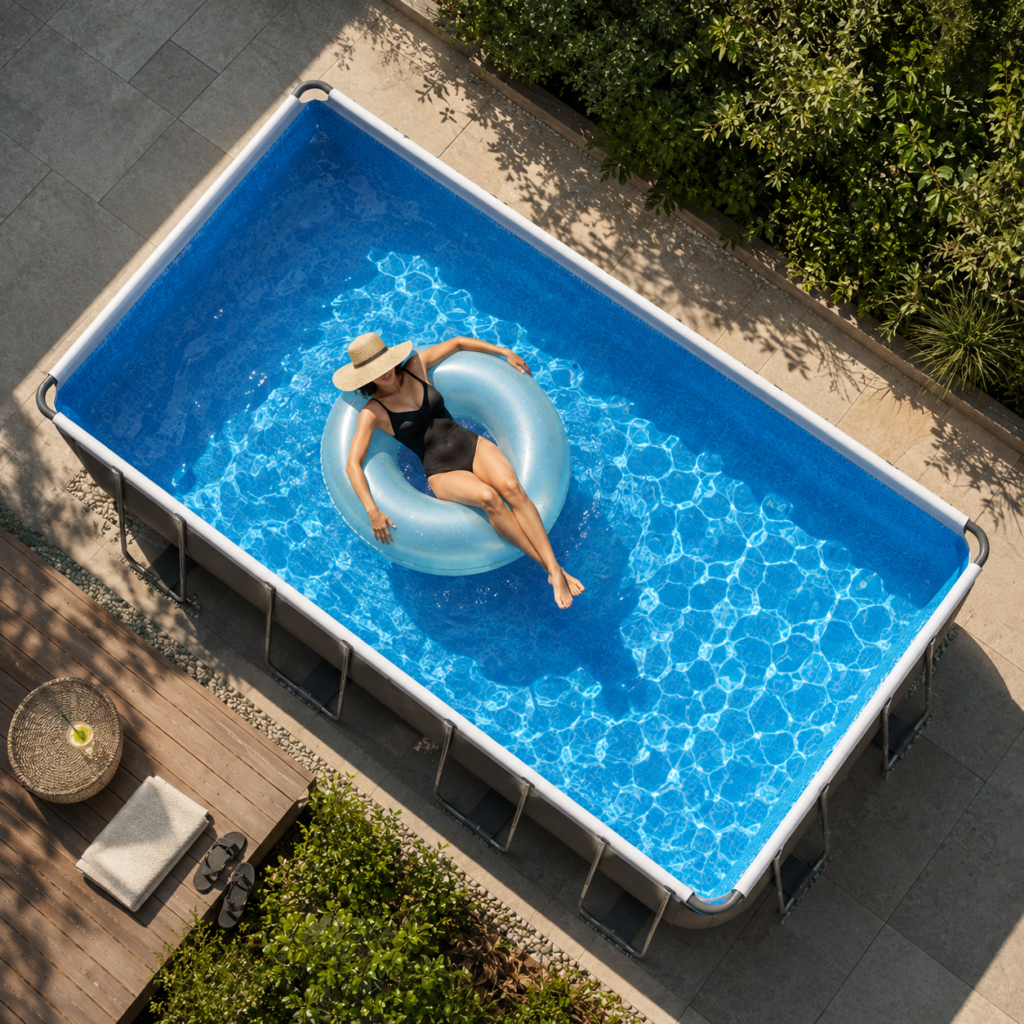
Many Indian homes fill their pool from a borewell or a water tanker, and that water is often hard, full of dissolved minerals. The result can be white scale on the liner, cloudy water and chlorine that never seems to hold. The good news is that it is manageable once you understand what is going on.
What hard and borewell water does to a pool
Hard water carries a lot of dissolved calcium and magnesium. Many cities across India, including parts of Delhi NCR, Rajasthan, Gujarat, Hyderabad, Chennai and Bengaluru, depend on borewells where hardness and total dissolved solids (TDS) can be high. Water quality varies street to street, so never assume.
In a pool, hard water causes three typical problems:
- Cloudy water. Minerals come out of solution, especially when pH is high or water is warm, and make the pool look milky.
- Scale. A chalky white crust forms on the liner, waterline, ladder and inside the pump and filter.
- Chlorine trouble. High pH from alkaline borewell water makes chlorine less effective, so you add more and still get algae.
Some borewell water also contains iron, which can turn the water brown or leave rust-coloured stains when chlorine is added. That needs a different fix, so test for it.
Test your fill water first
Before you fill a pool, collect a clean bottle of your tap, tank or borewell water and test it. A good pool test kit or a pool shop test will show pH, total alkalinity, calcium hardness and chlorine. For TDS, a cheap handheld meter is useful.
Use the ranges printed on your test kit or the pool manufacturer’s guide, since they differ by product. The point is to know your starting numbers so you can fix the water before people swim in it.
Note your results in a phone note each week. Trends tell you more than a single reading, and they help a pool expert advise you faster.
Preventing cloudy water
Cloudy water in hard-water homes is usually a combination of high pH, high alkalinity and weak filtration. Work through these steps in order.
- Lower the pH using a pH reducer, in small doses, retesting after a few hours.
- Check total alkalinity. If it is very high, it keeps pushing pH up, so treat it too.
- Run the pump for long hours, 8 to 10 in summer, so the filter can trap the fine particles.
- Clean or backwash the filter often. Read our guide on filters and pumps to see what suits your pool.
- Use a clarifier if the water stays dull. It clumps tiny particles so your filter can catch them.
- Shock the pool if chlorine is low or if the water smells strongly of chlorine, which often points to chloramines.
Dealing with scale and stains
Scale builds up slowly. Catch it early, because it is much harder to remove once it has set.
Prevention
- Add a scale control or stain and scale product, following the label, particularly right after filling.
- Keep pH from creeping high. Most scale forms when pH and alkalinity rise together.
- Do not let water evaporate for too long without refreshing. Evaporation leaves minerals behind and concentrates the hardness.
- Wipe the waterline weekly with a soft sponge.
Removing light scale
Use a soft cloth or sponge and a product made for pool liners. Do not use harsh scrapers, wire brushes or strong household acids on vinyl or PVC pool walls, as they can damage the material and void your warranty.
Never pour strong acids or kitchen cleaners straight into the pool or onto the liner. Use only pool-safe products and follow the label. Keep chemicals out of children’s reach and wear gloves and eye protection.
Brown or green tint from iron
If water looks clear at fill but turns brown or tea-coloured after adding chlorine, iron is likely. A metal remover (sequestrant) helps lock the metals so the filter can handle them. Using a pre-filter on the fill hose also reduces iron and sediment going into the pool.
Hard water routine that works
Here is a simple weekly plan for a home pool filled with hard or borewell water:
| When | What to do |
|---|---|
| Daily | Skim, run the pump, check the water looks clear |
| Every 2 to 3 days | Test pH and chlorine, adjust as needed |
| Weekly | Test alkalinity, brush walls, rinse cartridge or backwash, add scale control |
| After a party or heavy use | Shock the pool, run the pump longer, retest next day |
| Monthly | Test hardness and TDS, partial drain if readings climb |
If TDS keeps climbing over many weeks, because mineral levels build up with evaporation, replace part of the water with fresher water. Pairing this with a smart refill plan helps in cities with water shortages, and we cover that in our guide to saving water with a home pool.
Filling smartly to reduce problems
- If you can, mix borewell water with softer municipal or tanker water to bring hardness down. Test after mixing.
- Fill through a sediment pre-filter to remove sand, rust and silt.
- Let tanker water settle in a clean tank before filling if it looks muddy.
- After filling, run the pump for 24 hours before adjusting chemicals, then test everything.
- Do not use water softener salt water or water with a high salt level for a regular chlorine pool.
Bigger frame pools hold thousands of litres, so the first fill is a good time to get the chemistry right. If you are comparing sizes, our pools collection lists round, rectangular and oval options with their capacity. Remember that KOKOKOKO imports each pool to order: book with a 30% advance, expect delivery in 4 to 7 weeks, and pay the 70% balance when it reaches our Bangalore warehouse. Sizes marked In stock are simpler: you pay in full and get delivery in about 1 week.
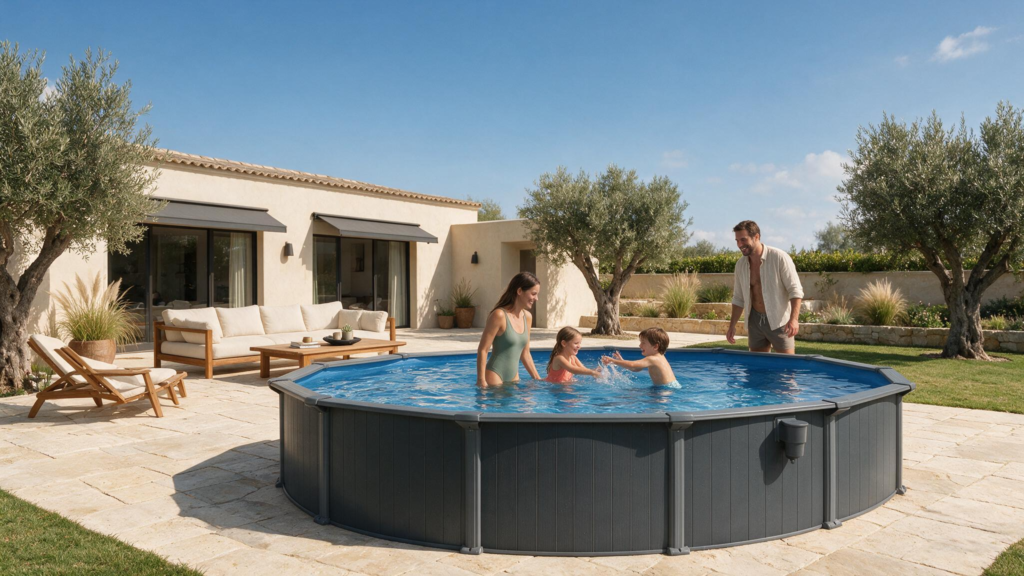
A hard-water pool is not a bad pool. It just needs a little more testing and a steady routine. Children should always be supervised by an adult near water, and pool chemicals must be stored safely.
Frequently asked questions
Why is my new pool cloudy right after filling?
Most often it is high pH and alkalinity from the fill water, combined with a filter that has not run long enough. Test, correct pH, and run the pump continuously for 24 hours.
Can I use borewell water to fill my pool?
Yes, many Indian pool owners do. Test it first for pH, hardness, iron and TDS, and use a pre-filter and scale control as needed.
How do I remove white scale from my pool liner?
Clean gently with a soft sponge and a product made for pool liners, and prevent new scale by keeping pH balanced. Avoid harsh scrapers or strong acids.
How often should I change pool water?
There is no fixed number. Partial replacement is wise when TDS and hardness keep climbing or water stays dull despite correct chemistry.
Choose a pool that is easy to maintain
Talk to us on WhatsApp about your water source and pool size, and we will help you pick the right pool and filter.
Explore poolsChat on WhatsApp