
Hot Tubs & Spas
Hot tub care A simple weekly water routine for Indian homes

Warm water is lovely for you and for bacteria and algae too. The good news is that keeping a hot tub clean is not hard. A few quick checks a week, plus a regular water change, keep it clear and safe.
Why spa water needs more care than a pool
A hot tub holds a small amount of warm water and several people use it at once. Sweat, body oils, sunscreen and lotions all go in. Warm water also helps germs grow faster, so the water balance can slip quickly if you ignore it for a week or two.
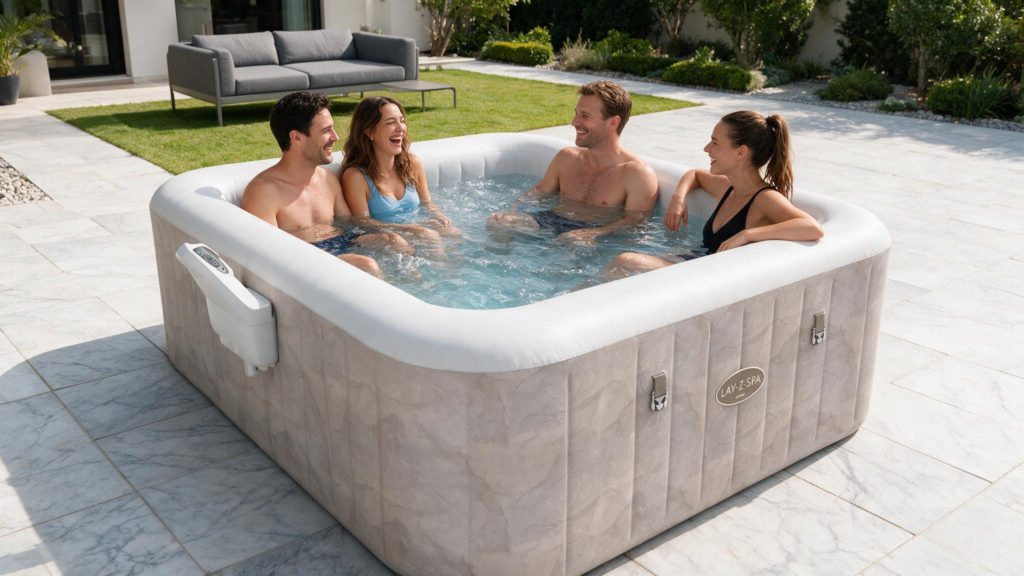
The Lay-Z-Spa range has a built-in filter system, so the work is mainly about testing, sanitising and keeping the filter clean. Always follow your model’s manual for the exact chemical products and amounts, because they differ.
Your weekly routine
Pick a fixed day, such as Sunday morning, so it becomes a habit.
- Test the water with test strips or a kit and note the pH and sanitiser level
- Adjust the pH and sanitiser if they are outside the range your manual suggests
- Rinse the filter cartridge with a hose and check for dirt and wear
- Wipe the waterline with a soft cloth to remove oily film
- Skim off leaves, insects and floating dirt
- Check the cover for dirt, tears and standing water
- Run the filter for the time your model recommends
Take a shower before you get in. It cuts down on lotions, oils and sweat, and it makes the water last longer between changes. Keep a small rinse bucket by the tub for feet.
pH, sanitiser and hard water
pH
pH tells you whether the water is acidic or alkaline. If it is off, sanitiser works poorly and the water can irritate your skin and eyes. Most spa makers suggest a narrow range around neutral, but follow the numbers in your own manual. Use a pH adjuster product, a little at a time, and retest.
Sanitiser
Chlorine or bromine tablets or granules are common choices. Use only products made for hot tubs, and never mix different chemicals together. Add them to the water as the label says, not directly onto the liner.
Hard and borewell water
In many Indian cities, tap and borewell water is hard. It can leave white scale on the walls and heater and make the water cloudy. A few simple steps help.
- Use a pre-filter on the hose when you fill, if you can
- Use a scale control or stain and scale product made for spas
- Check the pH often, as hard water tends to push it up
- Wipe scale off early, before it hardens
If you want to understand this better, our guide on hard water in pools applies in a similar way to spas, although the volumes are smaller.
Filters and covers
The filter is the heart of the system. A blocked filter means weak flow, cloudy water and a heater that works harder than it should.
- Rinse the cartridge weekly, more often in summer or after parties
- Soak it in a filter cleaning product every few weeks, as the manual says
- Replace it when it is torn, flattened or stays dirty after cleaning
- Keep a spare cartridge at home, as imported spares take time to arrive
The cover helps keep out dust, leaves and rain, and it saves heat. Dusty Indian summers and monsoon rains both make a good cover a must. Keep it on whenever the tub is not in use, and clean it with mild soap and water.

KOKOKOKO imports genuine spas and can help you with the right accessories. Because items are imported to order, it is wise to plan your spare filters and chemicals before you actually need them.
When to change the water
Even with good care, spa water gets old. Dissolved solids build up and the chemicals stop working as well. The usual advice is a full change every few weeks to a few months, depending on how many people use it, how often, and what the manual says.
Change it sooner if the water is cloudy and stays that way after treatment, has a strong smell, or has foam that does not go away.
Changing the water in a water-scarce city
A spa holds a modest volume compared with a pool, so it is easier on your water budget. If you can, use the old water for the garden, but only after it has been left to lose chlorine, and never use it on edible plants. Check local rules about drainage too.
Always switch off the power before cleaning, changing filters or draining the tub. Store chemicals in a cool, dry, locked place away from children. Never leave kids near a spa without an adult. If you have heart, blood pressure or pregnancy concerns, check with your doctor before using a hot tub.
Troubleshooting
| Problem | Likely cause | What to try |
|---|---|---|
| Cloudy water | Low sanitiser, dirty filter, high pH | Test, adjust, clean the filter, run the pump longer |
| Green water | Algae from low sanitiser or heat | Follow the manual’s shock treatment, then clean the filter |
| White scale | Hard water | Use scale control, wipe early, consider a water change |
| Foam | Lotions, soap, detergents | Use an anti-foam product, rinse before use, change water if needed |
| Strong chemical smell | Used-up sanitiser, not too much | Test and treat, then change the water if it persists |
Frequently asked questions
How often should I test hot tub water?
Test at least once a week, and before heavy use, such as a party. In summer or after rain, test more often.
Can I use swimming pool chemicals in my hot tub?
Use products made for spas and follow your manual. Pool products can be too strong or the wrong type for small, warm water volumes.
Why is my hot tub water cloudy?
The usual causes are a dirty filter, low sanitiser or a high pH. Test the water, clean the filter and adjust, and the water often clears within a day.
Is hard water a problem for a hot tub?
It can be. Hard water leaves scale on the heater and walls. Use scale control, check pH often and consider filling through a pre-filter. The spas range is easy to maintain with a simple routine.
Planning a hot tub for your home?
We will help you choose a spa and explain what you need for the first week, from filters to chemicals.
Explore Lay-Z-SpaChat on WhatsApp